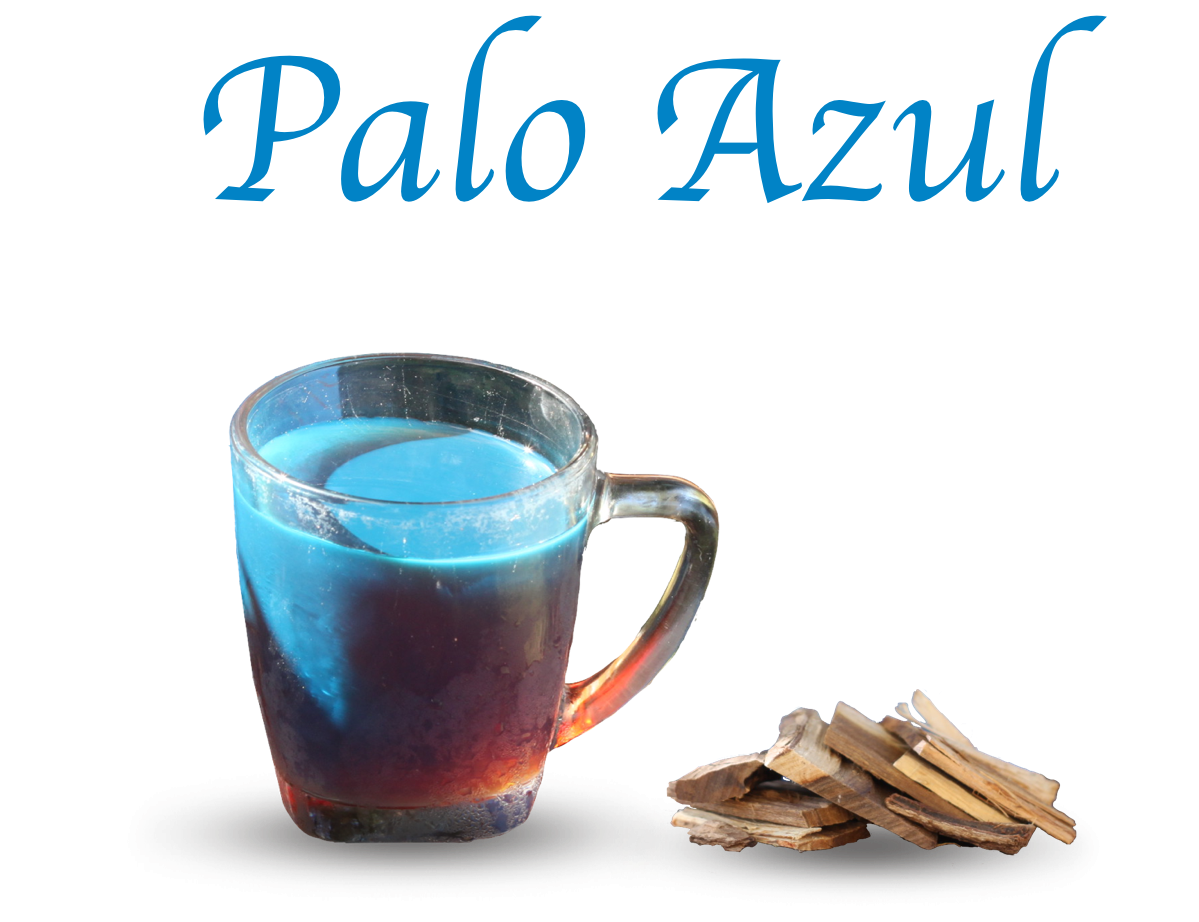

After thousands of hours of research, we compiled a summary of all the benefits of palo azul tea that studies have shown. This way, you can learn everything that palo azul can do for your health. Let’s get straight to it then! And don’t forget to help your friends & family by sharing palo azul with them!
Summary
This quote from a 2020 review on palo azul summarizes its beneficial properties:
“The Eysenhardtia genus (palo azul) is a family of plants that are rich in secondary metabolites, which have shown potential activity in the control and mitigation of urinary disorders, diabetes, oxidative stress, protein glycosylation, microbial infections, inflammation, pain or discomfort, muscle contractions and cytotoxicity. Among the actions determined are its diuretic, antidiabetic, antiglycation, antioxidant, anti-inflammatory, antimicrobial potential, cardioprotective, and inhibits neurodegeneration.”

- Helps to promote weight loss, healthy cholesterol levels, and cardiovascular health
- Supports liver function
- Detoxify heavy metals and neutralize free radicals that cause oxidative stress

- Improve levels of blood glucose and insulin sensitivity

- Helps to improve arthritis, sciatica and gout

- Cleanse toxins without electrolyte loss
- Reduces kidney stone growth and alleviates kidney and urinary tract pain

- Promotes healthy blood pressure
- Supports digestive health

- Effective against bacteria that cause UTIs, fevers, pneumonia, and dental diseases
- Supports a healthy immune system
Health Benefits of Palo Azul

1. Antioxidant
Over a dozen studies have concluded in their results that palo azul exhibited significant antioxidant activity. For example, this article cites sources which demonstrate that palo azul has around “8.7 to 26.5 times higher antioxidant capacity than green tea and black tea.”
Moreover, this 2015 study concluded that the “high antioxidant capacity of (palo azul) may be due to the presence of flavonoids or polyphenols in the extract.”
Fortunately for us palo azul lovers, a 2021 study found that palo azul tea “can reduce the oxidative stress caused by the imbalance between reactive oxygen species (ROS) because of its free radical scavenging activity.“
2. Promotes weight loss

A 2014 study found that palo azul’s extracts “showed a significant decrease of body weight in diabetic rats and produced significant loss in body weight as compared to normal animals during the study.” Moreover, they found that palo azul “reduced the blood glucose, body weight, glycogen, levels of triglyceride and cholesterol.”
This 2020 study similarly concluded that “the trend of anti-obesity, anti-atherosclerosis, and blood glucose-lowering effects of palo azul has been confirmed” and it “exhibited a tendency to decrease subcutaneous fat weight“, which is the visible fat in our body.
Moreover, a 2017 study analyzed 2734 twins and found that the twins with the highest consumption of flavonoid-rich foods (onions, tea, apples, pears, and cocoa) “had a 3-9% lower FMR (fat mass ratio) than that of their co-twins.”
Another study looked at 124,000 people and found that “flavonoids increase energy expenditure, decrease fat absorption and function as anti-inflammatories. Increased consumption of most flavonoid subclasses was associated with reduced weight gain.”
3. Improves cholesterol levels

This 2018 study found that palo azul “showed antidiabetic and anti-hyperlipidemic activities” and it “markedly decreased the levels of serum triglycerides (40%) and total cholesterol (29.4%).”
Hyperlipidemia means your blood has too many lipids (or fats), such as cholesterol and triglycerides.”
Moreover, this 2021 study concluded the following: “Mice treated with the palo azul extract showed significant decrease in fasting blood glucose level and lipid profile (cholesterol). The oral administration of (palo azul extract) to the diabetic mice resulted in a significant decrease in triglycerides and cholesterol levels.”
Another 2014 study found that “palo azul reduced the blood glucose, marker enzymes of hepatic function, glycogen, levels of triglyceride, and cholesterol.” This study also showed that the “level of HDL was increased” after oral administration of palo azul.
HDL (high-density lipoprotein), or “good” cholesterol, absorbs cholesterol and carries it back to the liver.
4. Cardioprotective

This 2021 study mentions that palo azul is used as a “blood purifier, against liver diseases and as a hypotensive”, meaning that it lowers blood pressure.
Hypotensive drugs reduce arterial blood pressure and cardiac output and thereby lower the work and oxygen consumption of the heart.
This 2020 review on palo azul mentions that “among the actions determined are its diuretic [13], antidiabetic, antiglycation [14], antioxidant [15], anti-inflammatory [16], and antimicrobial [17] potential. It also has cytotoxic properties [8], is cardioprotective, and inhibits neurodegeneration.”
Moreover, another 2020 study concluded that “the trend of anti-obesity, anti-atherosclerosis, and blood glucose-lowering effects of palo azul has been confirmed” and “it is expected to have a preventive effect on metabolic syndrome.”
Metabolic syndrome is a cluster of conditions that occur together, increasing your risk of heart disease, stroke and type 2 diabetes.
5. Liver-protective

A 2022 study done on mice concluded in their results that palo azul’s “extract significantly reduced oxidative damages in both the kidneys and the liver, and such effect has been related to the high antioxidant capacity.”
This 2021 study found that “diabetic mice treated with palo azul extracts showed significant recovery and revival of the central vein of the liver.”
Moreover, a 2016 study showed that palo azul reduced specific enzyme levels that cause liver damage in mice, “leading to a hepatoprotective effect.”
These findings are supported by a 2014 study concluded the following: “(Palo azul) prevents oxidative stress, acts as a suppressor of liver, kidney and pancreas cell damage. Palo azul showed anti-glycation, liver-protective and hypoglycemic actions that could be potentially beneficial against type 2 diabetes. Palo azul possesses considerable reactive oxygen species (ROS) scavenging activity and demonstrated a hepatoprotective role.”
Hepatoprotection is the “ability of a substance to prevent damage to the liver.”
6. Detoxifies Heavy Metals

This 2011 study showed that “(palo azul) is a rich source of natural antioxidant compounds with the ability to chelate metals and reduce free radicals.” Moreover, a 2016 study found that the metal scavenging effects of palo azul’s flavonoid extracts were up to 89%.
This 2014 study also concluded that “(palo azul) showed Hdonor activity, free radical scavenging activity and metal chelating ability.”
Chelating agents are capable of binding to toxic metal ions to form complex structures which are easily excreted from the body removing them from intracellular or extracellular spaces.”
Hdonor refers to the ability of a substance to neutralize free radicals (heavy metals) by donating a hydrogen atom. (1, 2, 3)

7. Anti-diabetic
Several studies have concluded that palo azul is anti-diabetic because it can decrease blood glucose levels, improve insulin sensitivity, and protect the pancreatic beta cells which insulin secretion. For example, a 2021 study concluded that palo azul’s extracts “demonstrated a significant decrease in fasting blood glucose level…had good antidiabetic potential and could be an appropriate nanomedicine to prevent the development of diabetes.”
These studies (1, 2, 3, 4) showed that palo azul significantly reduced blood glucose levels and these studies (1, 2, 3, 4) showed that palo azul improved improved insulin resistance.

Interestingly, a 2016 study ended with the following statement: “In conclusion, palo azul may increase muscle mass in the body and improve insulin resistance by facilitating the formation of myotubes by promoting myocyte differentiation.”
Moreover, a 2021 study mentions that “the root cause of diabetes is mainly associated with oxidative stress” and they found that palo azul tea “can reduce the oxidative stress caused by the imbalance between reactive oxygen species (ROS) because of its free radical scavenging activity.”
A 2018 study explains the biological mechanism of palo azul’s effects on diabetes:
“Chalcones, flavonoids, and dihydrochalcones in palo azul “promote pancreatic β-cell survival, insulin secretion-enhanced hyperglycemia, and hyperlipidemia in glucose-induced diabetic zebrafish. These findings suggest that (palo azul) could be used to prevent the development of diabetes.”

8. Anti-inflammatory
Results from over a dozen studies have concluded that palo azul induced significant anti-inflammatory activity because it’s very rich in polyphenols. For example, this 2016 study found that palo azul “exhibited significant anti-inflammatory activity.”
A 2015 concluded a similar result: “Our data indicate that palo azul exhibited significant anti-inflammatory activity in all the trials of paw and ear edema induced exhibiting also anti-arthritic activity.”
9. Anti-arthritic

This 2016 study concluded that palo azul had a “significantly dose-related anti-arthritic activity in M. tuberculosis-induced adjuvant arthritis test in rats, which is considered close to simulating human rheumatoid arthritis.”
A 2018 study found that palo azul and its flavonoids-rich fractions “inhibited secondary inflammatory reactions in arthritic rats.” Therefore, they concluded the following: “Our findings support the use of (palo azul) for the treatment of rheumatoid arthritis and pain management.”
They found that palo azul’s “flavonoids, have proven effective against arthritis by reducing cartilage degradation, diminishing leukocyte infiltration in the synovial space, decreasing serum cytokine levels, and other mechanisms.”
The authors concluded the following:
“After treatment for 7 days with (palo azul), the concentration of pro-inflammatory cytokines IL-6, TNF-α and GM-CSF decreased.” After arthritis develops, what follows is “the destruction of periarticular bone and cartilage” and this “eventually causes bony ankylosis and leg deformities. (Palo azul) partially inhibited the degradation of cartilage and bone, likely due to flavonoids.”
10. Improves sciatic nerve health

Sciatic nerve pain is commonly caused by inflammation and the accumulation of uric acid. Studies have also shown that palo azul reduces uric acid levels. For example, this 2010 study concluded that “the inhibition of inflammation “attenuates the pain and inflammatory response following chronic constriction injury (CCI) of the sciatic nerve.”
A 2019 medical article similarly states that “any cause of irritation or inflammation of the sciatic nerve can produce the symptoms of sciatica.” The authors also mention that “medications used in the treatment of sciatica include pain relievers, muscle relaxants, anti-inflammatories, and antidepressants.”
Moreover, this 2019 study on palo azul explains that “the accumulation of uric acid generates the production of monosodium urate crystals that can cause inflammatory and pain response, leading to renal and hepatic injuries.” The researchers found that “groups treated with the (palo azul extract) showed a significantly decreased uric acid.”
A 2008 study which supports this finding, mentions that palo azul “has been used in traditional treatments of nephrolithiasis or urolithiasis, lumbalgia, arthritis, rheumatism, sciatica, and as blood depurative because it eliminates uric acid, of which application the palo azul derives its diuretic and antirheumatic fame.”
11. Improves Gout

A 2015 study found that “(palo azul) showed good anti-XO (xanthine oxidase) activities. The inhibition percentage by (palo azul) on XO is comparable to that allopurinol, a therapeutic drug used to treat gout, which also suffers from many side effects such as hypersensitivity syndrome.”
A 2016 explains that “gout is a progressive, painful, debilitating form of inflammatory arthritis.” This 2015 study concluded that palo azul “exhibited significant anti-inflammatory activity” and it had a “significantly dose-related anti-arthritic activity in M. tuberculosis-induced adjuvant arthritis test in rats, which is considered close to simulating human rheumatoid arthritis.”

12. Diuretic
Diuretics are substances which promote diuresis (increase urination). Fortunately for us though, palo azul tea is not a regular like green tea or coffee. It is actually a potassium-saving diuretic, meaning that it excretes toxins through urination and while retaining optimal electrolyte levels.
This 2016 study found that palo azul is a “potassium-sparing diuretic”, which means that it flushes out toxins without electrolyte loss because it spares potassium, so it doesn’t lead to dehydration. They found that “(palo azul) induces an increase on urinary excretion of water and sodium, similar to furosemide, but with the advantage of a potassium-saving effect.”
13. Promotes healthy kidney function

Due to palo azul’s popularity for kidney health, it is often known as “kidney wood” or “kidney tea”. Over a dozen studies have evaluated palo azul’s diuretic activity and its beneficial effects for promoting healthy kidney function and reducing kidney stone growth.
A 2022 study concluded that palo azul’s “extract significantly reduced oxidative damages in both the kidneys and the liver, and such effect has been related to the high antioxidant capacity.”
Additionally, a 2008 study tested palo azul’s bark for its “antilithiatic and diuretic activity” and the researchers found that “a significant decrease in the weight of stones was observed after treatment in animals that received aqueous extract.”
This 2018 study also mentions that palo azul “has shown diuretic and antilithiatic effects, moderate antibacterial effects against Streptococcus mutans, anti-diabetic and antioxidant activity, and antifungal activity.”
Antilithiatic is the technical term for preventing the formation of, or relieving the symptoms of kidney stones.

These finding are corroborated by a 2022 study which mentioned that “(palo azul) contains polyphenols, flavonoids and alkaloids, which could be effective in preventing the process of stone formation. (Palo azul’s) beneficial effects might be associated with diuretic activities, as well as an inhibitory effect on crystallization, nucleation, and aggregation of crystals. Molecular mechanisms involving these effects could be related to antioxidant, anti-inflammatory, and antimicrobial properties.”
Moreover, this 2002 study explains that isoflavones from palo azul “significantly lower growth rate and nucleationrate of calcium oxalate crystals (kidney stones)” and “work as inhibitors in the formation and crystal growth of COM and phosphate and may protect against stone formation by reducing the degree of aggregation and the size of particles precipitated.”
14. Alkaline: Reduces urinary tract pain

Several studies show that diuretics are effective in treating urinary tract issues because they increase urinary flow. In addition, this study found that the palo azul extracts were effective against bacteria which are “the most frequent causal agents of urinary tract infection.”
Moreover, this book about botanical medicine writes the following statement about palo azul:
“If prone to acidic, overly concentrated urine, associated kidney stones and urinary tract sediment then Kidneywood (palo azul) will be of use. Because of the plant’s alkalinizing nature, acidic precipitants dissolve back into the urine, thereby reducing pain and urinary tract irritability associated with lithic deposits. Kidney wood (palo azul) is soothing to kidney and urinary tract irritability.”

15. Flavonoids
Numerous studies have concluded that palo azul is very rich in the flavonoid subclass of polyphenols. In fact, this article cites sources which demonstrate that palo azul has around “2 to 8 times higher phenolic content than green, black, and yellow teas.”
A 2021 study mentions that several types of flavonoids have been identified in palo azul including “flavones, isoflavones, flavanones, chalcones, dihydrochalcones and polyphenols.”

Fortunately for us, an epidemiological study showed an “inverse correlation between dietary flavonoid consumption and chronic degenerative diseases, such as cardiovascular diseases, diabetes, osteoporosis, neurodegenerative diseases, and cancers.”
Flavonoids are phytonutrients produced by plants to defend against UV radiation, infections, bacteria, fungi, and other pathogens. Flavonoids are a family of polyphenolic compounds and they’re found in vegetables, fruits, plants, bark, flowers, wine and teas.
16. Promotes healthy blood pressure

A medical review which analyzed 166 studies found that “flavonoids in tea may lower blood cholesterol concentrations and blood pressure, thereby providing some protection against cardiovascular disease.”
This is due to flavonoids’ ability to “inhibit the oxidation of LDL through a mechanism involving the elimination of free radicals that plays a key role during atherosclerosis.”
This study observed that the “consumption of (flavonoids) is associated with improvement in endothelial function (blockage of arteries) via vascular endothelial nitric oxide synthase and protein kinase B (Akt) activation.”
17. Promotes bone health

A 2021 study mentions that “palo azul tea is widely used in folk medicine as a diuretic and for the treatment of kidney diseases, urinary tract irritation, kidney pain, bone pain (analgesic).”
One study showed that “flavonoids have the most potential of dietary components for promotion of bone health beyond calcium and vitamin D.”
This same study mentions that “recent epidemiological studies show flavonoid consumption to have a stronger association with bone than general fruit and vegetable consumption.”
18. Supports digestive health

One study showed the efficacy of flavonoids “in the treatment of hepatobiliary dysfunction and digestive complaints, such as sensation of fullness, loss of appetite, nausea, and abdominal pain.”
Loss of appetite is also commonly attributed to bacteria, and many studies have demonstrated the potent antibacterial activity of palo azul and its flavonoids.

19. Anti-bacterial
Studies have shown that palo azul is anti-bacterial against bacteria that are associated with several types of infections that cause fever, diarrhea, urinary tract infections, respiratory infections, pneumonia, sore throat, cavities, tooth decay, periodontitis, and others.
Interestingly, a 2012 study which tested 47 different plants found that palo azul was among the plants that showed the “highest inhibitory effect against” bacteria that cause dental diseases such as toothache, dental caries, periodontal disease, gingivitis and bad breath.
A 2018 study even concluded that palo azul “showed good antimicrobial effects in E. coli” and “the results here presented corroborate the folk medicinal use of (palo azul) in the treatment of infections, diarrhea, inflammation, and pain.”

Moreover, this 2009 study concluded the following:
“(Palo azul) has broad-spectrum effect because the antibacterial activity observed included both Gram-positive and Gram-negative organisms. The present results suggest that (palo azul) is a good alternative to other antibacterial compounds and underlines the importance of screening plant extracts in the search for new agents. Based on these results, the isolation and characterisation of active compounds from (palo azul) is particularly important in light of the multidrug resistance observed in certain Gram-positive and Gram-negative bacteria, against which only a few therapeutic options are available.”
A medical review concluded that “flavonoids have also been recognised for their antimicrobial activity and many researchers have isolated and identified the structures of flavonoids having properties of antifungal, antiviral and antibacterial activity. Because of this property, many flavonoids are now being used extensively in the fields of nutrition, food safety and health.”

20. Antinociceptive
Antinociceptives block the detection of a painful or harmful stimulus by sensory neurons. They inhibit the sensation of pain by blocking signals from neurons.
This 2018 study found that palo azul “showed antinociceptive and antidiarrheal effects with similar potency compared to standard drugs.”
Another 2018 study concluded that palo azul “decreased the serum levels of pro-inflammatory cytokines and showed antinociceptive activity. These findings support the use of (palo azul) in Mexican folk medicine for treating rheumatoid arthritis and pain management.”
The researchers explained the following mechanism for palo azul’s antinociceptive effects on pain:
“We evaluated the anti-arthritic and antinociceptive properties of (palo azul) bark and its rich-flavonoids fractions in murine models. Many plant constituents, including flavonoids, have proven effective against arthritis by reducing cartilage degradation, diminishing leukocyte infiltration in the synovial space, decreasing serum cytokine levels, and other mechanisms.”
Conclusion

We know this article was a bit long, but we hope it was worth your time and that you share this information with others who might benefit from it. Now that you know palo azul’s vast array of health benefits, we hope you this helps you make healthier lifestyle choices.

Clinical Studies
Palo azul is also known as: Eysenhardtia polystachya (E. polystachya, E.P), Cyclolepis genistoides (C. genistoides), kidney wood and palo dulce
Anti-Oxidant & Anti-Inflammatory
(March 2022) Nephroprotective Plants: A Review on the Use in Pre-Renal and Post-Renal Diseases
(August 2021) Screening Anti-Inflammatory Effects of Flavanones Solutions
(May 25, 2011) Anti-inflammatory properties from isolated compounds of Cyclolepis genistoides
Flavonoids
(2012) Flavonoid intake and bone health
(2009) Chapter 18 – Flavonoids and Cardiovascular Health
(2016, Dec 29) (Medical Review: 161 studies) Flavonoids: an overview
(2014) Polyphenols in Chronic Diseases and their Mechanisms of Action
(2014) Antioxidant Properties of Wheat Bran against Oxidative Stress
(2014) Chapter 32 – Anti-Inflammatory and Immunomodulatory Properties of Dietary Flavonoids
(2012) Habitual intake of dietary flavonoids and risk of Parkinson disease
(2016) Dietary flavonoid intake and incidence of erectile dysfunction
(2012) Flavonoids and cancer prevention: a review of the evidence.
(2001) Dietary agents in cancer prevention: flavonoids and isoflavonoids.
(2005) The antitumor activities of flavonoids.
(2019) Flavonoids and bladder cancer risk.
(2019) Flavonoids and bladder cancer risk.
Diuretic
(Jan 21, 2016) Diuretic activity of the bark of Eysenhardtia polystachya
(Jan-May, 2007) Herbal Drugs in Urolithiasis – A Review
(Dec 18, 1998) Antiurolithiatic activity of Eysenhardtia polystachya aqueous extract on rats
Palo Azul (Cyclolepis Genistoides)
Anti-Diabetic
(2020) Phytochemical and Pharmacological Study of the Eysenhardtia Genus
(March 16, 2001) Antihyperglycemic Activity and Chemical Constituents of Eysenhardtia platycarpa
Antibacterial
Sciatic Nerve and Arthritis
(May 25, 2011) Anti-inflammatory properties from isolated compounds of Cyclolepis genistoides
(2012) Flavonoid intake and bone health
(May 25, 2011) Anti-inflammatory properties from isolated compounds of Cyclolepis genistoides