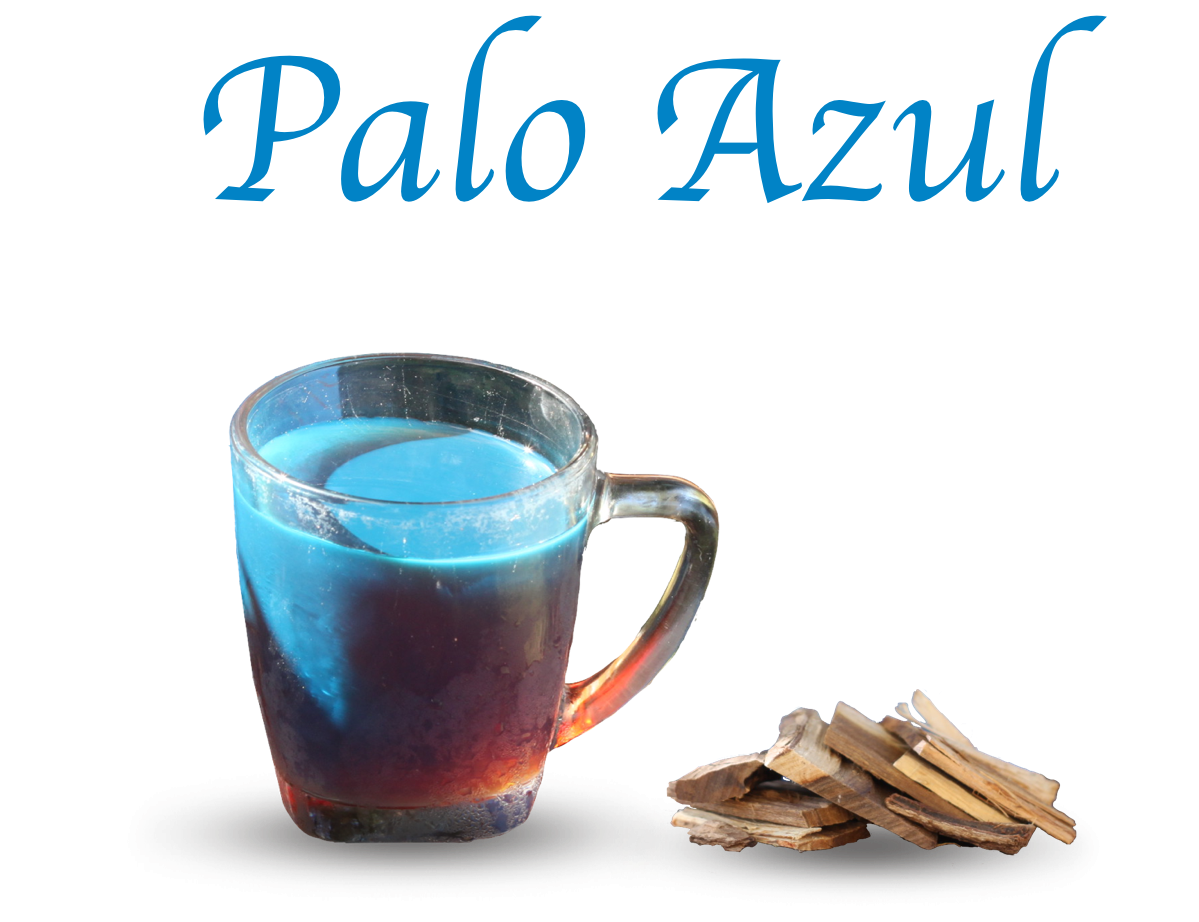

Palo azul tea has been used traditionally for over 500 years to improve the health of conditions such as arthritis, sciatica, gout, rheumatism, and lumbago. Recently, several studies have found that palo azul showed anti-inflammatory activity and they’ve supported palo azul’s effectiveness for these traditional uses.
For example, a 2016 study found that palo azul “exhibited significant anti-inflammatory activity.”
This 2024 study concluded that palo azul extracts “have been shown to be an excellent anti-inflammatory agent.” At the maximum concentration tested, it was observed that almost 100% inhibition was obtained with (palo azul extracts), which is higher than the values obtained with the model drug (87.21%).”
A 2015 concluded a similar result: “Our data indicate that palo azul exhibited significant anti-inflammatory activity in all the trials of paw and ear edema induced exhibiting also anti-arthritic activity.”
Moreover, this 2011 study concluded the following: “The present study supports the use of the flavonoid-rich fractions of (palo azul) in the treatment of chronic granulomatous inflammation, according to the granuloma model, without producing ulcerogenic effects.”

How can anti-inflammatories help you?
1. Improve arthritis health

A 2018 study found that palo azul and its flavonoids-rich fractions “inhibited secondary inflammatory reactions in arthritic rats.” Therefore, they concluded the following: “Our findings support the use of Eysenhardtia polystachya bark (palo azul) for the treatment of rheumatoid arthritis and pain management.”
The researchers of this study explain the biological mechanisms of palo azul’s anti-arthritic effects:
“We evaluated the anti-arthritic and antinociceptive properties of an ethanolic extract of (palo azul) bark and its rich-flavonoids fractions in murine models. Many plant constituents, including flavonoids, have proven effective against arthritis by reducing cartilage degradation, diminishing leukocyte infiltration in the synovial space, decreasing serum cytokine levels, and other mechanisms.”

In other words…palo azul’s flavonoids showed the ability to reduce bone deterioration and tissue injury because of their anti-inflammatory activity.
The authors concluded the following:
“After treatment for 7 days with (palo azul), the concentration of pro-inflammatory cytokines IL-6, TNF-α and GM-CSF decreased.” After arthritis develops, what follows is “the destruction of periarticular bone and cartilage” and this “eventually causes bony ankylosis and leg deformities. (Palo azul) partially inhibited the degradation of cartilage and bone, likely due to flavonoids.”
2. Improve sciatic nerve health

Sciatic nerve pain is commonly caused by inflammation and the accumulation of uric acid. Studies have also shown that palo azul reduces uric acid levels. For example, this 2010 study concluded that “the inhibition of inflammation “attenuates the pain and inflammatory response following chronic constriction injury (CCI) of the sciatic nerve.”
A 2019 medical article similarly states that “any cause of irritation or inflammation of the sciatic nerve can produce the symptoms of sciatica.” The authors also mention that “medications used in the treatment of sciatica include pain relievers, muscle relaxants, anti-inflammatories, and antidepressants.”
Moreover, this 2019 study on palo azul explains that “the accumulation of uric acid generates the production of monosodium urate crystals that can cause inflammatory and pain response, leading to renal and hepatic injuries.” The researchers found that “groups treated with the (palo azul extract) showed a significantly decreased uric acid.”
A 2008 study which supports this finding, mentions that palo azul “has been used in traditional treatments of nephrolithiasis or urolithiasis, lumbalgia, arthritis, rheumatism, sciatica, and as blood depurative because it eliminates uric acid, of which application the palo azul derives its diuretic and antirheumatic fame.”
3. Improve Gout

A 2015 study found that “(palo azul) showed good anti-XO (xanthine oxidase) activities. The inhibition percentage by (palo azul) on XO is comparable to that allopurinol, a therapeutic drug used to treat gout, which also suffers from many side effects such as hypersensitivity syndrome.”
A 2016 explains that “gout is a progressive, painful, debilitating form of inflammatory arthritis.” This 2015 study concluded that palo azul “exhibited significant anti-inflammatory activity” and it had a “significantly dose-related anti-arthritic activity in M. tuberculosis-induced adjuvant arthritis test in rats, which is considered close to simulating human rheumatoid arthritis.”
4. Promote bone health

A 2021 study mentions that “palo azul tea is widely used in folk medicine as a diuretic and for the treatment of kidney diseases, urinary tract irritation, kidney pain, bone pain (analgesic).”

Interestingly, this study found that flavonoids “have the most potential of dietary components for promotion of bone health beyond calcium and vitamin D.” The researchers mentions that “recent epidemiological studies show flavonoid consumption to have a stronger association with bone than general fruit and vegetable consumption.”
A 2012 study explains the beneficial biological mechanisms of flavonoids in bone health:
“Flavonoids have been reported to enhance bone formation and to inhibit bone resorption through their action on cell signaling pathways that influence osteoblast and osteoclast differentiation.”

In other words…flavonoids showed the ability to promote new bone formation and prevent bone loss. For these reasons, flavonoids may be even more beneficial for bone health than calcium or vitamin D!
What Exactly Do Anti-inflammatories Do?

Anti-inflammatories are precursors of molecules responsible for signaling out the resolution of inflammation. In other words, they reduce inflammation by blocking inflammatory signals. For example, Omega-3s are anti-inflammatory, and without them, we have less ability to fight inflammation due to our inability to block inflammatory signals.
This 2021 study on palo azul explains what inflammation is and how flavonoids modulate it:
“Inflammation is a nonspecific immune response against injury by harmful agents that attempts to restore homeostasis and the function of damaged tissues. The first reaction to external agents is an acute inflammation produced by accumulation of leukocytes that migrate from the blood to the damaged sites. Recruited immune cells release high levels of cytokines and other mediators.
In particular, flavonoids modulate multiple kinases of immune signaling pathways and inhibit NF-κβ, thus reducing cytokine expression. In addition, some derivatives of flavonoids inhibit the production of pro-inflammatory cytokines such as TNF-α.”
Furthermore, this 2015 study explains that “histamine is a potent mediator to act in acute inflammation; it is produced in the early phase of acute inflammation to increase vascular permeability. Since the action of histamine is transient, the inflammation decreases very quickly after induction. Chronic inflammation is a reaction arising when the acute response is insufficient to eliminate proinflammatory agents. Chronic inflammation occurs by means of the development of proliferative cells. These cells can be either spread or in granuloma form. (Palo azul) showed significant anti-inflammatory activity in cotton pellet induced granuloma and thus found to be effective in chronic inflammatory conditions.”
1. Inhibit Pro-inflammatory Cytokines, TNF, IL-1, IL-6

This 2021 study found that palo azul’s “flavanones ameliorate edema and trigger downregulation of the pro-inflammatory cytokines TNF-α, IL-1β, and IL-6.”
A 2015 study similarly concluded that “(palo azul) could also markedly inhibit production of pro inflammatory cytokines, especially TNF (tumor necrosis factor alpha), IL-1 (interleukin 1 beta), PGE (prostaglandin 2) and LTB (leukotriene B4). These effects resulted in an attenuation of the inflammatory cytokines and ultimately suppression of the edema.”
Edema is swelling caused by excess fluid trapped in your body’s tissues.
TNF: Tumour necrosis factor α (TNFα) is a potent paracrine and endocrine mediator of inflammatory and immune functions.
Prostaglandin E2 (PGE2) is a potent inflammatory mediator.
Leukotriene B4 (LTB4) is a leukotriene involved in inflammation. It has been shown to promote insulin resistance in obese mice.
This 2020 also explains that “the secretion of inflammatory cytokines such as tumor necrosis factor-α (TNF-α) and interleukin-6 (IL-6) increases from adipose tissue, which also induces insulin resistance.”
2. Decrease CRP and NF-κB

Moreover, this 2018 study found that palo azul “decreased the serum levels of pro-inflammatory cytokines IL-6 and TNF-α.”
The researchers explain the negative effects of these cytokines:
“IL-1, IL-6, and TNF-α are the key cytokines that drive inflammation in rheumatoid arthritis. TNF-α is the major dominant modulator of pro-inflammatory cytokines. Their action on the liver increases the synthesis of acute phase proteins such as the complement system and the CRP.”
CRP is a pentameric protein synthesized by the liver, whose level rises in response to inflammation and it is primarily induced by the IL-6 action.
Additionally, this 2018 study found that palo azul “exerted in vitro anti-inflammatory effects, mainly, by the decrease in the production of H2O2 and IL-6.”
Hydrogen peroxide belongs to a group of chemically reactive molecules known as reactive oxygen species (ROS). Hydrogen peroxide H2O2 has long been known to act as a second messenger in intracellular signal transduction pathways, including nuclear factor kappa B (NF-κB)-dependent gene expression, e.g. for pro-inflammatory mediators, including tumor necrosis factor (TNF-α).”
NF-κB induces the expression of various pro-inflammatory genes, including those encoding cytokines and chemokines.
Conclusion
In summary, studies showed that palo azul tea could help to reduce inflammation and uric acid levels because it’s rich in flavonoids. These properties have all shown beneficial effects associated with these conditions, and this is why palo azul may help to promote the health of arthritis, sciatica, gout, and joints.

Clinical Studies
Palo azul is also known as: Eysenhardtia polystachya (E. polystachya, E.P), Cyclolepis genistoides (C. genistoides), kidney wood and palo dulce
(2021) Medicinal and Aromatic Plants of South America: Cyclolepis Genistoides
(2021) Screening Anti-Inflammatory Effects of Flavanones Solutions
(2013) (Medical review: 166 studies) Chemistry and Biological Activities of Flavonoids: An Overview
2011) Anti-inflammatory properties from isolated compounds of Cyclolepis genistoides
(2012) Flavonoid intake and bone health
(2009) Chapter 18 – Flavonoids and Cardiovascular Health
(2016) (Medical Review: 161 studies) Flavonoids: an overview
(2013) (Medical review: 166 studies) Chemistry and Biological Activities of Flavonoids: An Overview
(2014) Chapter 32 – Anti-Inflammatory and Immunomodulatory Properties of Dietary Flavonoids