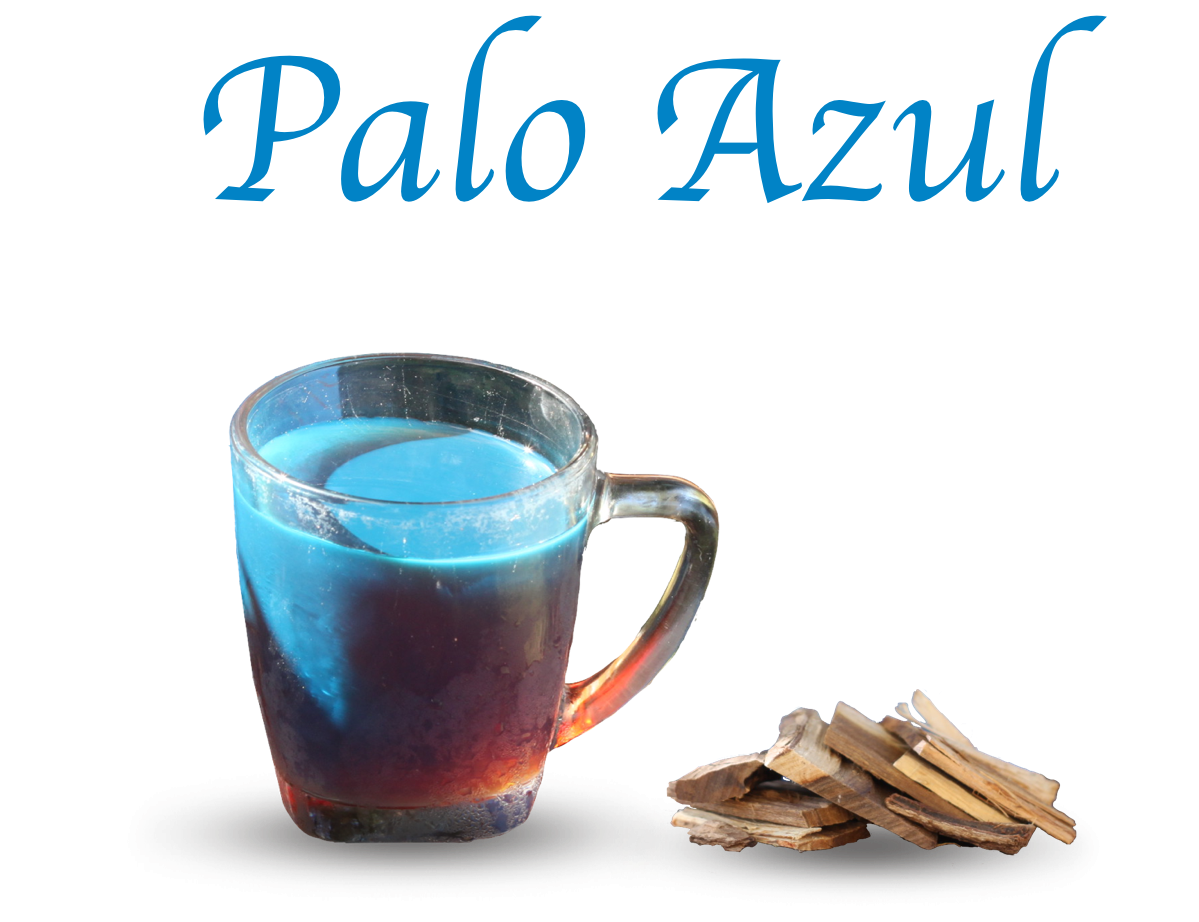

Dozens of studies have concluded that palo azul tea exhibited anti-oxidant, metal-chelating, anti-inflammatory and diuretic activity. Because of these properties, studies have shown that palo azul helps to detoxify free radicals, AGEs, ROS, heavy metals, lipid peroxides, reduce pro-inflammatory ctyokines, and excrete toxins.
Antioxidant

Numerous studies have shown that palo azul is a powerful antioxidant, therefore, this 2021 study concluded that palo azul tea “can reduce the oxidative stress caused by the imbalance between reactive oxygen species (ROS) because of its free radical scavenging activity.”
This article cites sources which demonstrate that palo azul has around “8.7 to 26.5 times higher antioxidant capacity than green tea and black tea respectively.” It also cites studies which show that palo azul has “2 to 8 times higher phenolic content than green, black, and yellow teas.”
This 2022 study concluded that palo azul “significantly reduced oxidative damages in both the kidneys and the liver, and such effect has been related to the high antioxidant capacity.”
1. Free Radical Scavenging Activity

This 2021 study found that palo azul extracts “rich in phenolic compounds and flavonoids showed high scavenging activities.” Therefore, they concluded that palo azul tea “can reduce the oxidative stress caused by the imbalance between reactive oxygen species (ROS) because of its free radical scavenging activity.”
This 2016 study found that “scavenging of hydrogen peroxide by (palo azul) was found to be better compared to the ascorbic acid (Vitamin C).”
A 2014 study also showed that “the free radical scavenging activity of (palo azul) showed 98.32% and ascorbic acid 86.53% at the same concentrations.” The study concluded that palo azul extracts were “fast and effective scavengers of the ABTS radical” and that palo azul “is a more efficient scavenger than standard ascorbic acid.”
2. Prevents Oxidative Stress

This 2014 study, concluded that palo azul “prevents oxidative stress, acts as a suppressor of liver, kidney and pancreas cell damage.”
A 2018 study concluded that a palo azul extract provided “an effective defense against oxidative stress in zebrafish embryos.”
This 2016 study found that palo azul “significantly decreased ROS production preventing oxidative stress.” The researchers concluded the following:
“Our data indicates that the bark of (palo azul) has an ability to reduce oxidative stress through decreasing of lipid peroxidation, antioxidant properties, and increasing radical scavenging enzymes activity, also reduce intracellular reactive oxygen species.”
3. Antiglycative & Anti-AGEs

This 2018 study found that palo azul “showed an ability to reduce the formation of advanced glycation end products, and an antioxidant capacity.”
Moreover, a 2014 study , found that “(palo azul) possesses considerable antioxidant activity with reactive oxygen species (ROS) scavenging activity and demonstrated an anti-AGEs (advanced glycation end products) and hepatoprotective role, inhibits hyperglycemic, hyperlipidemic and oxidative stress.”
The study concluded that “palo azul has an antidiabetic, antihyperlipidemic, and significant ability to reduce the formation of AGEs and antioxidant activities, which are considered to play important roles in the development of diabetes complications.”

Glycation is the covalent attachment of a sugar to a protein or lipid. This process is responsible for many complications in diabetes mellitus, some diseases and in aging.
Advanced glycation end products (AGEs) are proteins or lipids that become glycated as a result of exposure to sugars.
Fortunately for us palo azul tea lovers, a 2018 study showed that palo azul “markedly reduced the formation of AGEs” and it “provided a protective effect against glycation.” The study concluded that palo azul “could therefore be an antiglycation agent for prevention diabetic complications.”
This 2019 study also found that “treatment with dihydrochalcone (a powerful ant-glycation compound isolated from palo azul) protects renal function, prevents kidney injury and ameliorated inflammation.”
4. Metal-Chelating

This review explains that “heavy metals are systemic toxicants known to induce adverse health effects in humans, including cardiovascular diseases, developmental abnormalities, neurologic and neurobehavioral disorders, diabetes, hearing loss, hematologic and immunologic disorders, and various types of cancer.”
Fortunately for us, this 2011 study showed that “(palo azul) is a rich source of natural antioxidant compounds with the ability to chelate metals and reduce free radicals.”
Moreover, a 2016 study found that the metal scavenging effects of palo azul’s flavonoid extracts were up to 89%.
This 2014 study also concluded that “(palo azul) showed Hdonor activity, free radical scavenging activity and metal chelating ability.”
Chelating agents are capable of binding to toxic metal ions to form complex structures which are easily excreted from the body removing them from intracellular or extracellular spaces.”
Hdonor refers to the ability of a substance to neutralize free radicals (heavy metals) by donating a hydrogen atom. (1, 2, 3)
In addition, this 2021 study selected “(palo azul) from a set of medicinal plants based on its ability to diminish metal-induced OS (oxidative stress) cellular markers.”
5. Reduce Lipid Peroxidation

Lipid peroxidation is the process in which “oxidants such as free radicals attack lipids containing carbon-carbon double bond(s), especially polyunsaturated fatty acids (PUFAs).” This process produces lipid preoxide products such as “malondialdehyde (MDA) and 4-hydroxy-2-nonenal (4-HNE).”
The researchers explain that: “MDA appears to be the most mutagenic product of lipid peroxidation” and it “is an important contributor to DNA damage and mutation. This MDA-induced DNA alteration may contribute significantly to cancer and other genetic diseases.”
They explain that: “4-HNE is the most toxic” and it is “one of major generators of oxidative stress.”
This 2014 study concluded that “(palo azul) contains a high amount of flavonoids and phenolics, possesses considerable antioxidant activity with ROS scavenging activity and has the ability to reduce lipid peroxidation.”
A 2007 study also found that palo azul “extracts reduced the peroxyl formed by AAPH during the initiation of lipid peroxidation, preventing lipid peroxidation from occurring.”
This 2020 review mentions that treatment with palo azul “reduced the damage caused by the formation of reactive oxidative species, while decreasing the formation of malondialdehyde (MDA) and lipoperoxidation” and they showed the “protective action of (palo azul extracts) against damage caused by hydrogen peroxide.”
Moreover, this 2016 study on palo azul explains its beneficial effects against lipid peroxidation:
“Our data indicates that the bark of (palo azul) has an ability to reduce oxidative stress under diabetic conditions, prevent and/or delay the onset renal, pancreatic, and hepatic damage through decreasing of lipid peroxidation, antioxidant properties, and increasing radical scavenging enzymes activity, also reduce intracellular reactive oxygen species, and they consequently could alleviate complications of diabetes.”
Anti-Inflammatory

Numerous studies concluded in their results that palo azul induced a significant inhibition of inflammation and showed anti-inflammatory activity. For example, this 2016 study found that palo azul “exhibited significant anti-inflammatory activity.”
A 2015 concluded a similar result: “Our data indicate that palo azul exhibited significant anti-inflammatory activity in all the trials of paw and ear edema induced exhibiting also anti-arthritic activity.”
This 2018 study also found that palo azul “ameliorated markers of inflammation” and that it “exerted in-vitro anti-inflammatory effects.”

1. Inhibit Pro-inflammatory Cytokines, TNF, IL-1, IL-6

This 2021 study found that palo azul’s “flavanones ameliorate edema and trigger downregulation of the pro-inflammatory cytokines TNF-α, IL-1β, and IL-6.”
A 2015 study similarly concluded that “(palo azul) could also markedly inhibit production of pro inflammatory cytokines, especially TNF (tumor necrosis factor alpha), IL-1 (interleukin 1 beta), PGE (prostaglandin 2) and LTB (leukotriene B4). These effects resulted in an attenuation of the inflammatory cytokines and ultimately suppression of the edema.”
Edema is swelling caused by excess fluid trapped in your body’s tissues.
TNF: Tumour necrosis factor α (TNFα) is a potent paracrine and endocrine mediator of inflammatory and immune functions.
Prostaglandin E2 (PGE2) is a potent inflammatory mediator.
Leukotriene B4 (LTB4) is a leukotriene involved in inflammation. It has been shown to promote insulin resistance in obese mice.
This 2020 also explains that “the secretion of inflammatory cytokines such as tumor necrosis factor-α (TNF-α) and interleukin-6 (IL-6) increases from adipose tissue, which also induces insulin resistance.”
2. Decrease CRP and NF-κB

Moreover, this 2018 study found that palo azul “decreased the serum levels of pro-inflammatory cytokines IL-6 and TNF-α.”
The researchers explain the negative effects of these cytokines:
“IL-1, IL-6, and TNF-α are the key cytokines that drive inflammation in rheumatoid arthritis. TNF-α is the major dominant modulator of pro-inflammatory cytokines. Their action on the liver increases the synthesis of acute phase proteins such as the complement system and the CRP.”
CRP is a pentameric protein synthesized by the liver, whose level rises in response to inflammation and it is primarily induced by the IL-6 action.
Additionally, this 2018 study found that palo azul “exerted in vitro anti-inflammatory effects, mainly, by the decrease in the production of H2O2 and IL-6.”
Hydrogen peroxide belongs to a group of chemically reactive molecules known as reactive oxygen species (ROS). Hydrogen peroxide H2O2 has long been known to act as a second messenger in intracellular signal transduction pathways, including nuclear factor kappa B (NF-κB)-dependent gene expression, e.g. for pro-inflammatory mediators, including tumor necrosis factor (TNF-α).”
NF-κB induces the expression of various pro-inflammatory genes, including those encoding cytokines and chemokines.
Diuretic

Diuretics are substances which promote diuresis, which is another word for urination. A 2016 study found that palo azul is a “potassium-sparing diuretic”, which means that it flushes out toxins without electrolyte loss because it spares potassium, so it doesn’t lead to dehydration.
A 2022 study which mentions that “this plant (palo azul) contains polyphenols, flavonoids and alkaloids, which could be effective in preventing the process of (kidney) stone formation. These beneficial effects might be associated with diuretic, antioxidant, anti-inflammatory, and antimicrobial properties.”
Due to the ability of diuretic substances to excrete toxins through urine, athletes would use diuretics to pass drug tests. This is why The World Anti-Doping Agency banned diuretics in competitive sports. This article mentions that “diuretics are often abused by athletes to excrete water for rapid weight loss and to mask the presence of other banned substances.”
Diuretics help the kidneys to rid the body of unneeded salt and water through urine.
Conclusion
In summary, palo azul can help to detoxify your body form toxins because it’s a powerful antioxidant, anti-inflammatory and diuretic. Because of these properties, palo azul may help to inhibit oxidative stress, free radicals, detoxify heavy metals, downregulate inflammatory cytokines and excrete toxins, all of which are associated with a wide variety of health benefits.

Clinical Studies
Palo azul is also known as: Eysenhardtia polystachya (E. polystachya, E.P), Cyclolepis genistoides (C. genistoides), kidney wood and palo dulce
(August 2021) Screening Anti-Inflammatory Effects of Flavanones Solutions
(April 2021) Medicinal and Aromatic Plants of South America: Cyclolepis Genistoides
(May 25, 2011) Anti-inflammatory properties from isolated compounds of Cyclolepis genistoides
(2021) Magiktea Palo Azul: Diuretic
Heavy Metals Toxicity and the Environment