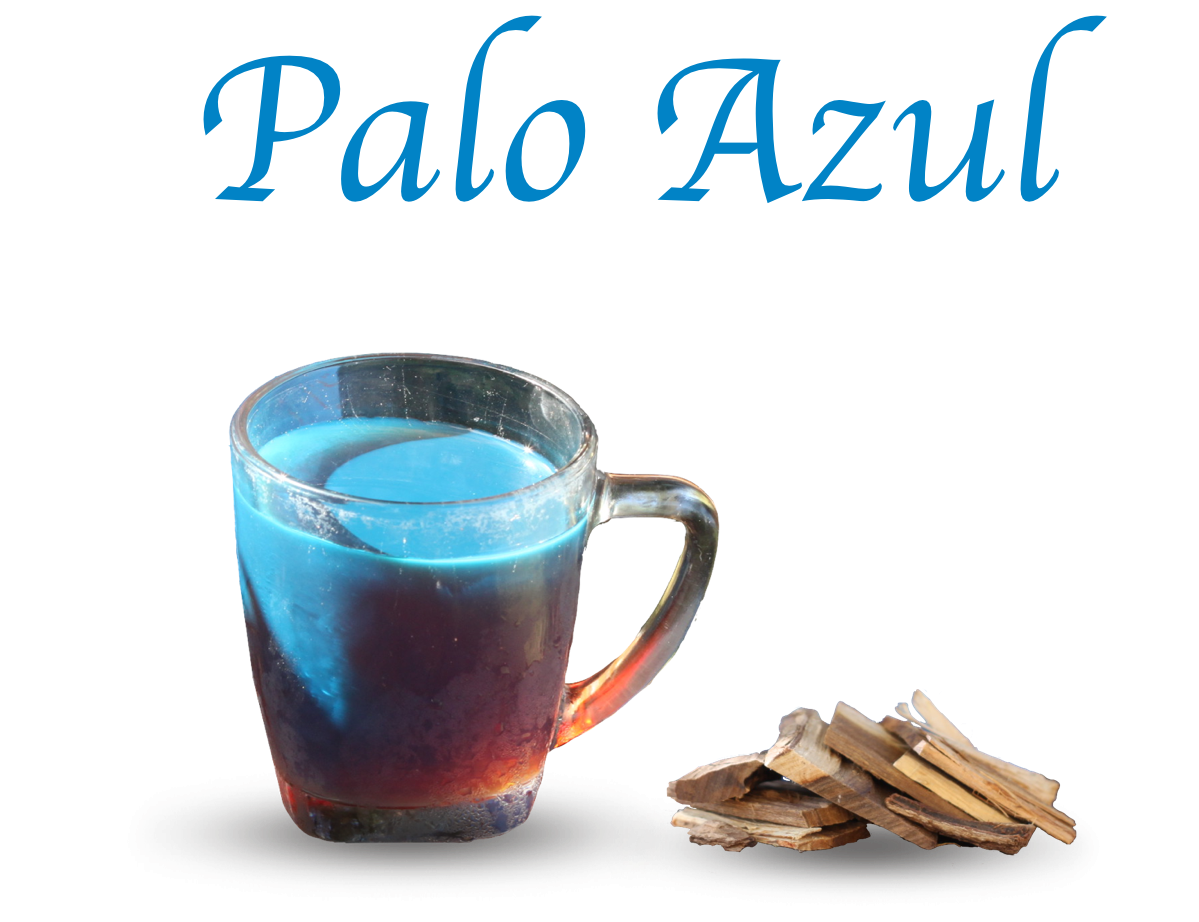

Palo azul tea is supercharged with beneficial health properties, and it has been used traditionally for improving conditions such as digestive issues, diarrhea, and promoting kidney and liver health. Many of palo azul’s health benefits have actually been attributed to its flavonoid rich content.
Due to its beneficial properties, this 2018 study mentions that “(palo azul) is used in the Mexican traditional medicine as diuretic, anti-inflammatory, spasmolytic, wound healing, and antinociceptive agent, it is also employed for the empirical treatment of genitourinary infections, cancer, arthritis, diarrhea, fever, cough, vomiting, bronchitis, and bladder disorders.”
1. Antidiarrheal & Antinociceptive

This 2018 study found that palo azul “showed antinociceptive and antidiarrheal effects with similar potency compared to standard drugs.”
This 2004 study mentions that palo azul “is widely known as a traditional Mexican remedy used as a diuretic, stomach relaxant, for soothing colic.”
This 2013 study mentions that palo azul “is still used in the treatment of diarrhea in children.”
Antinociceptives have the ability to block the detection of a painful or harmful stimulus by blocking signals from neurons.
Another 2018 study mentioned that palo azul “decreased the serum levels of pro-inflammatory cytokines and showed antinociceptive activity. These findings support the use of Eysenhardtia polystachya in Mexican folk medicine for treating rheumatoid arthritis and pain management.”
They also found that palo azul “had a protective effect against chemical nociception to acetic acid similar to indomethacin.” Indomethacin is used to relieve pain, swelling, and joint stiffness caused by arthritis, gout, bursitis, and tendonitis.
A 2021 study supports these findings concluded that palo azul’s “flavanones ameliorate edema and trigger downregulation of the pro-inflammatory cytokines.”
This 2009 study mentions that “pro-inflammatory cytokines are involved in the up-regulation of inflammatory reactions, and there is abundant evidence that certain pro-inflammatory cytokines are involved in the process of pathological pain.”
2. Gastroprotective
This 2007 study on palo azul found that it has beta-amirine, and this study found that “beta-amirine has anti-inflammatory, antinociceptive, gastroprotective and hepatoprotective properties.”
Gastroprotective agents are commonly used by elderly patients for gastroesophageal reflux disease and other indications.
Gastroesophageal reflux disease (GERD) is a digestive disorder that occurs when acidic stomach juices, or food and fluids back up from the stomach into the esophagus.
3. Rich in Flavonoids

Flavonoids are natural antioxidant compounds commonly found in vegetables, fruits, plants, bark, flowers, wine and tea such as green tea or palo azul.
A 2021 study even found several phytochemicals in palo azul such as “flavones, isoflavones, flavanones, phenolic compounds, chalcones and dihydrochalcones” which have been linked to its health benefits, highlighting “diuretic, antidiabetic, antiglycation, antioxidant, anti-inflammatory, antimicrobial potential.”

A medical review which analyzed 166 studies on flavonoids, showed the efficacy of flavonoids “in the treatment of hepatobiliary dysfunction and digestive complaints, such as sensation of fullness, loss of appetite, nausea, and abdominal pain.”
4. Antioxidant

Abdominal pain can sometimes be caused by kidney or liver issues. Many studies have shown that palo azul is effective for promoting kidney and liver health because it’s antioxidant.
A 2021 study actually showed that palo azul “significantly reduced oxidative damages in both the kidneys and the liver, and such effect has been related to the high antioxidant capacity.”
This 2007 study found that “flavonones (in palo azul) have been identified with antibacterial and antifungal activity. The infusion or decoction is used for kidney problems, urinary tract pains, kidney calculi, and as deflamatory.”
5. Antibacterial

Loss of appetite is commonly attributed to bacterial infection, and many studies have found evidence to suggest palo azul’s anti-bacterial activity because of its flavonoid rich content.
In fact, a medical review which reviewed 166 studies mentions that “flavonoids are synthesized by plants in response to microbial infection.” The researchers mentioned that it is due to their potent antibacterial, antimicrobial and antiviral activity that flavonoids “show inhibitory activity against E. coli.”
The authors of this review also mention that the “medicinal efficacy of many flavonoids as antibacterial, hepatoprotective, anti-inflammatory, anticancer, and antiviral agents is well established.”
Finally, a 2012 study examined 47 plants and palo azul was among the plants that showed the “greatest inhibitory effect” against bacterial diseases such as E. coli!
Conclusion
In summary, palo azul is antidiarrheal, antinociceptive, antioxidant, anti-bacterial, and it’s rich in flavonoids. Because of these properties, palo azul may help to alleviate pain, support kidney & liver function and maintain a healthy digestive system.

Clinical Studies
Palo azul is also known as: Eysenhardtia polystachya (E. polystachya, E.P), Cyclolepis genistoides (C. genistoides), kidney wood and palo dulce
(August 2021) Screening Anti-Inflammatory Effects of Flavanones Solutions
(2016, Dec 29) (Medical Review: 161 studies) Flavonoids: an overview