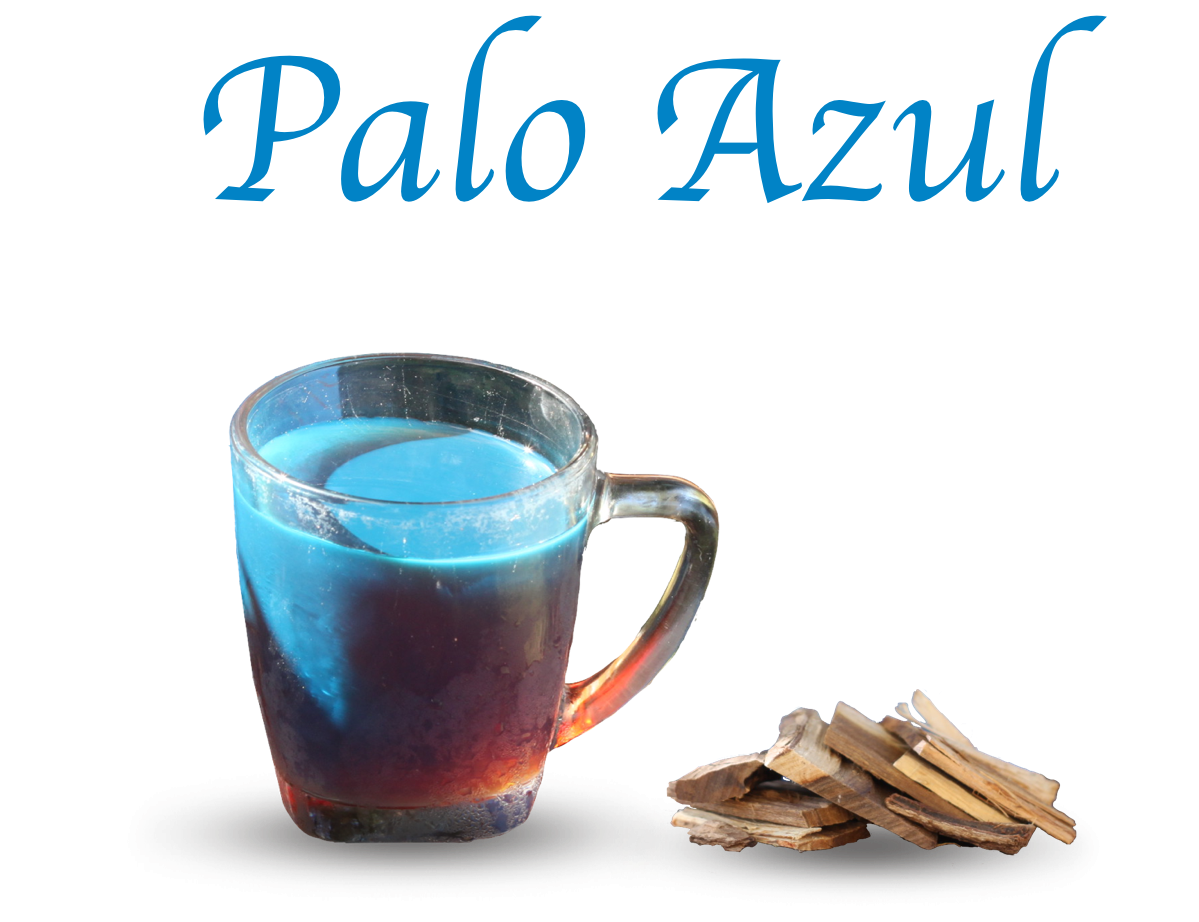

Several studies have shown that palo azul can help to detoxify heavy metals because of its ability to scavenge free radicals, inhibit oxidative stress and prevent lipid peroxidation, all of which are induced by heavy metals. Therefore, the studies concluded that palo azul exhibited metal-chelating activity.
1. Metal-Chelating

For example, this 2011 study concluded that “(palo azul) is a rich source of natural antioxidant compounds with the ability to chelate metals and reduce free radicals in vitro.”
In addition, this 2016 study found that the metal scavenging effects of palo azul’s flavonoid extracts were up to 89%, and vitamin C’s scavenging effects were 91%.
Chelating agents are capable of binding to toxic metal ions to form complex structures which are easily excreted from the body removing them from intracellular or extracellular spaces.”
A recent 2024 study also found that palo azul has phenolic compounds that “can reduce gold ions and thus stabilize the nanometric particles formed.”
2. Hdonor

A 2014 study similarly concluded that “(palo azul) showed Hdonor activity, free radical scavenging activity and metal chelating ability.”
Hdonor refers to the ability of a substance to neutralize free radicals (heavy metals) by donating a hydrogen atom. (1, 2, 3)
3. Antioxidant: Inhibit Metal ROS & Free Radicals

This 2016 study explains that palo azul’s ability to chelate metals is due to its antioxidant activity:
“The ability to chelate and deactivate transition metals is an important mechanism of antioxidant activity. Antioxidants compounds have been shown to delay, inhibit, and prevent the oxidation, possibly through the mechanisms interacting with biological systems as scavenging free radicals, absorbing oxygen radicals, and chelating of the metal ions.”
Moreover, this 2021 study found that palo azul has the “ability to diminish metal-induced OS (oxidative stress) cellular markers.”
The researchers found that palo azul “diminished the generation of superoxide anion in the presence of FAC (ferric ammonium citrate). Moreover, the extract increased catalase activity when cells were exposed to FAC. Our findings suggest that (palo azul) extract exerts the protective effect via the activation of cellular antioxidant defenses.”

This 2020 study similarly concluded the following: “Whereas cells exposed to FAC exhibited increased levels of reactive oxygen species (ROS), the exposure to (palo azul) extract showed a reduction in ROS levels.”
In this graph you can see that the study showed that palo azul’s (Cg) metal chelating activity was significant (*** p < 0.001).

FAC: An iron source such as ferric ammonium citrate (FAC), FeCl3, or FeCl2.
Superoxide anion is a highly reactive species that can damage cells. However, the body has scavenging and antioxidant mechanisms that can rapidly remove the superoxide anion. Superoxide dismutase (SOD) forms hydrogen peroxide (H2O2) from the superoxide anion. Catalase then converts hydrogen peroxide to water.
Catalase is one of the crucial antioxidant enzymes that mitigates oxidative stress to a considerable extent by destroying cellular hydrogen peroxide to produce water and oxygen.
4. Inhibit Lipid Peroxidation

This 2014 study found that “(palo azul) contains a high amount of flavonoids and phenolics, possesses considerable antioxidant activity with ROS scavenging activity and has the ability to reduce lipid peroxidation. It also has iron chelating activities and we also have proven that the oral administration of (palo azul) could decrease oxidative stress associated with diabetes mellitus in the liver, pancreas and kidney.”
The researchers mention that “iron is the most important lipid pro-oxidant. It is known that Fe2+-accelerates lipid peroxidation by breaking down hydrogen and lipid peroxides formed by Fenton free radical reaction.” They also found that “(palo azul) has the best antioxidants of ascorbic acid (vitamin C) and BHT, suggesting that (palo azul) is able to chelate metals.”
Lipid peroxidation is the chain of reactions of oxidative degradation of lipids. It is the process in which free radicals “steal” electrons from the lipids in cell membranes, resulting in cell damage.
A 2014 review mentions that this “stealing” of electrons creates lipid peroxidation products like malondialdehyde (MDA) and 4-hydroxy-2-nonenal (4-HNE). The authors write that “MDA appears to be the most mutagenic product of lipid peroxidation, whereas 4-HNE is the most toxic. 4-HNE is considered as “one of major generators of oxidative stress.”
These studies (1, 2, 3, 4) also showed that palo azul inhibits lipid peroxidation.
How can heavy metals impact our health?

A 2012 review explains the negative health effects of heavy metals: “Several studies from our laboratory have demonstrated that reactive oxygen species (ROS) production and oxidative stress play a key role in the toxicity and carcinogenicity of metals such as arsenic, cadmium, chromium, lead, and mercury. Because of their high degree of toxicity, these five elements rank among the priority metals that are of great public health significance. They are all systemic toxicants that are known to induce multiple organ damage, even at lower levels of exposure.”
“These metals are systemic toxicants known to induce adverse health effects in humans, including cardiovascular diseases, developmental abnormalities, neurologic and neurobehavioral disorders, diabetes, hearing loss, hematologic and immunologic disorders, and various types of cancer.”
Another 2018 review mentions that “the predominant source resulting in measurable human exposure to heavy metals is the consumption of contaminated drinking water and the resulting health issues may include cardiovascular disorders, neuronal damage, renal injuries, and risk of cancer and diabetes. Thus utilization of heavy metal-contaminated water is resulting in high morbidity and mortality rates all over the world.”
Arsenic

The previously cited 2012 review found that countries like “West Bengal, Bangladesh, Thailand, Inner Mongolia, Taiwan, China, Mexico, Argentina, Chile, Finland and Hungary that have been exposed to high concentrations of arsenic in their drinking water and are displaying various clinico-pathological conditions including cardiovascular and peripheral vascular disease, developmental anomalies, neurologic and neurobehavioural disorders, diabetes, hearing loss, portal fibrosis, hematologic disorders (anemia, leukopenia and eosinophilia) and carcinoma. Research has also pointed to significantly higher standardized mortality rates for cancers of the bladder, kidney, skin, and liver in many areas of arsenic pollution.”
Cadmium

The 2012 review mentions that “cadmium is a severe pulmonary and gastrointestinal irritant, which can be fatal if inhaled or ingested. After acute ingestion, symptoms such as abdominal pain, burning sensation, nausea, vomiting, salivation, muscle cramps, vertigo, shock, loss of consciousness and convulsions.”
Additionally, “The International Agency for Research on Cancer and the U.S. National Toxicology Program have concluded that there is adequate evidence that cadmium is a human carcinogen.”
Lead

The same review mentions that “today, the largest source of lead poisoning in children comes from dust and chips from deteriorating lead paint on interior surfaces. Exposure to lead occurs mainly via inhalation of lead-contaminated dust particles or aerosols, and ingestion of lead-contaminated food, water, and paints. Adults absorb 35 to 50% of lead through drinking water.”

The authors cite evidence that “in children, these studies have shown an association between blood level poisoning and diminished intelligence, lower intelligence quotient-IQ, delayed or impaired neurobehavioral development, decreased hearing acuity, speech and language handicaps, growth retardation, poor attention span, and anti social and diligent behaviors.”
In adults, they found that “reproductive effects, such as decreased sperm count in men and spontaneous abortions in women have been associated with high lead exposure. Moreover, “acute exposure to lead induces brain damage, kidney damage, and gastrointestinal diseases, while chronic exposure may cause adverse effects on the blood, central nervous system, blood pressure, kidneys, and vitamin D metabolism.”
They also found that “a series of recent studies in our laboratory demonstrated that lead-induced toxicity and apoptosis in human cancer cells involved several cellular and molecular processes including induction of cell death and oxidative stress, transcriptional activation of stress genes and DNA damage.”
Mercury

The authors mention that “the major sources of chronic, low level mercury exposure are dental amalgams and fish consumption.”
Furthermore, they explain that “the molecular mechanisms of toxicity of mercury are based on its chemical activity and biological features which suggest that oxidative stress is involved in its toxicity. Inorganic mercury has been reported to increase the production of these ROS by causing defects in oxidative phosphorylation.”
Additionally, “mercury compounds have also been shown to induce increased levels of MDA in both the livers, kidneys, lungs and testes of rats treated with HgCl2. This increase in concentration was shown to correlate with the severity of hepatotoxicity and nephrotoxicity.”

Interestingly, the researchers found that selenium and vitamin E have a protective effect against mercury:
“HgCl2-induced lipid peroxidation was shown to be significantly reduced by antioxidant pretreatment with selenium. Selenium has been shown to achieve this protective effect through direct binding to mercury or serving as a cofactor for glutathione peroxidase and facilitating its ability to scavenge ROS [229]. Vitamin E has also been reported to protect against HgCl2-induced lipid peroxidation in the liver.”
Additionally, “mercury has been shown to induce the formation of ROS known to cause DNA damage in cells, a process which can lead to the initiation of carcinogenic processes.”
How can we defend against heavy metals?

According to these reviews, our drinking water seems to be contaminated with heavy metals, so it’s crucial to choose a clean source of water that has been tested for heavy metals. However, it may not be possible to completely avoid heavy metal toxicity as it seems that they have also contaminated our food (mainly fish), paint, aerosols, etc.
The authors of the extensive 2012 review explain that “to combat these effects, cells have antioxidant mechanisms that work to correct and avoid the formation of ROS (free radicals) in excess. These antioxidant mechanisms involve low molecular weight compounds such as vitamins C and E, melatonin, glutathione, superoxide dismutase, catalase, glutathione peroxidase and glutathione reductase that protect the cells by chelating mercury and reducing its oxidative stress potential.”

In addition to palo azul’s metal chelating ability, several studies have actually shown that it increased the glutathione peroxidase, superoxide dismutase, and catalase, which are the body’s endogenous antioxidant defenses.
For example, this 2007 study showed that palo azul “significantly increased the GSHPx (glutathione peroxidase) and CAT (catalase) activities.” This study concluded the following: “Our results show that GSHPx plays a primary role in minimizing oxidative damage. The protection against lipid peroxidation offered by GSHPx and the effect of palo azul on this enzyme appear to be relevant responses to ROS-induced membrane damage.”
Another 2018 study which corroborates this, also found that palo azul “showed a significant increase in antioxidant enzyme activities including CAT (catalase), SOD (superoxide dismutase), and GPx (glutathione peroxidase).”
Conclusion
In summary, heavy metal toxicity can cause ROS in our body which leads to oxidative stress and damage to our DNA that results in a wide variety of diseases. Metal chelating agents such as palo azul can help to reduce this damage by scavenging free radicals, inhibiting oxidative stress, ROS, lipid peroxidation and binding to heavy metals to remove them from the body.

Clinical Studies
Palo azul is also known as: Eysenhardtia polystachya (E. polystachya, E.P), Cyclolepis genistoides (C. genistoides), kidney wood and palo dulce
(2021) Cyclolepis genistoides aqueous extract as source of neuroprotective agents
(2020) Protective Effect of Cyclolepis genistoides Aqueous Extract against Cellular Oxidative Stress
(2018) Prevalence of exposure of heavy metals and their impact on health consequences
(2012) Heavy Metals Toxicity and the Environment