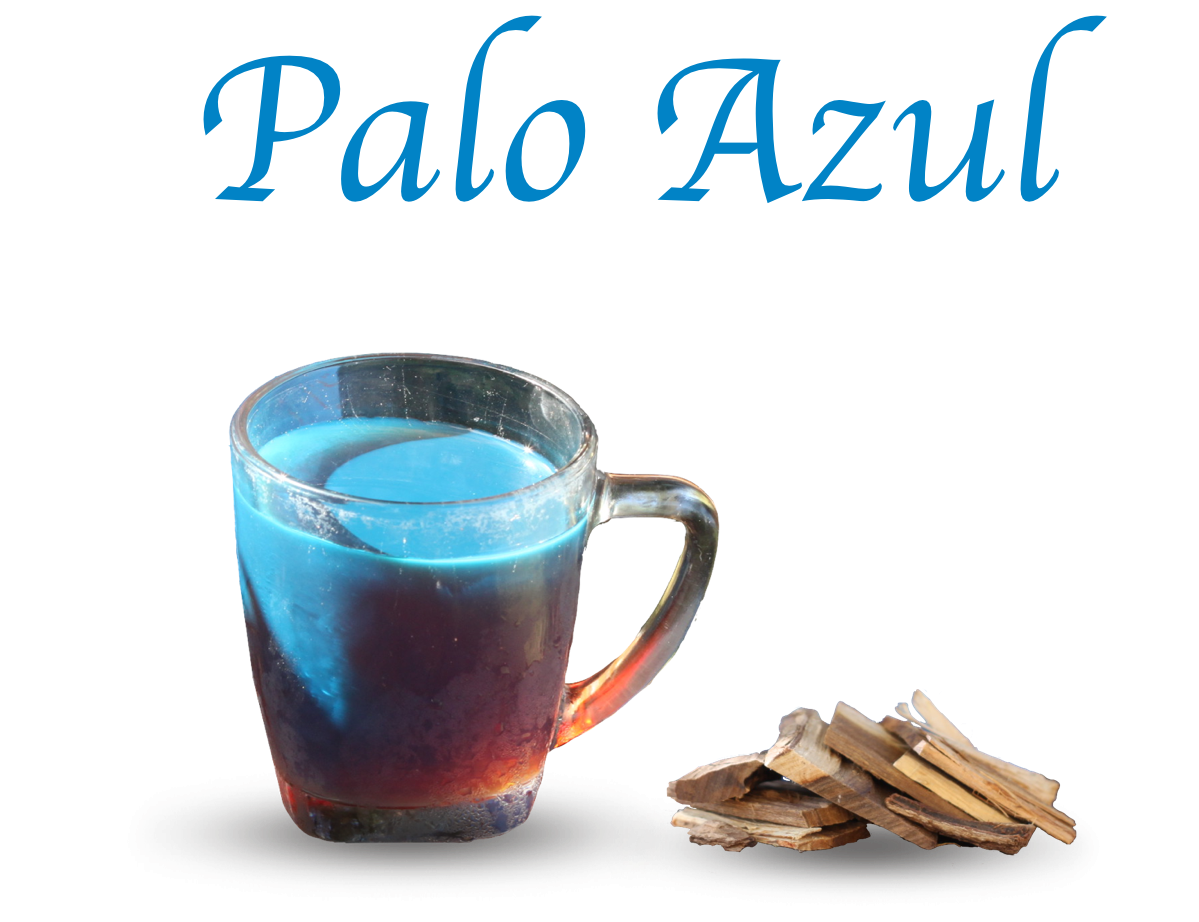

Palo azul tea has been traditionally consumed to promote liver health, and recent studies have demonstrated it’s efficacy for liver health because it is a powerful antioxidant. Due to its high antioxidant capacity, palo azul has been shown to reduce oxidative damage and inhibit lipid peroxidation in the liver.
A 2021 study on mice found that “diabetic mice treated with palo azul extracts showed significant recovery and revival of the central vein of the liver.”
Another 2021 study mentions that “palo azul is widely used in folk medicine as a blood purifier against liver diseases.”
1. Antioxidant: Reduces Oxidative Damage

A 2022 study concluded that palo azul’s “extract significantly reduced oxidative damages in both the kidneys and the liver, and such effect has been related to the high antioxidant capacity of the characterized phytochemicals.”
* “Phyto” means “plants”, and phytochemicals are antioxidant compounds (polyphenols, flavonoids, etc) produced by plants to protect them from oxidative stress

These findings are supported by a 2014 study, whose “results suggest that palo azul prevents oxidative stress, acts as a suppressor of liver, kidney and pancreas cell damage.” The authors also found that “palo azul showed anti-glycation and liver-protective actions” and that it “could decrease oxidative stress in the liver, pancreas and kidney.”
The authors explain the following: “(Palo azul) contains a high amount of flavonoids and phenolics, possesses considerable antioxidant activity with ROS scavenging activity and has the ability to reduce lipid peroxidation. It also has iron chelating, TEAC and DPPH activities and we also have proven that the oral administration of (palo azul) could decrease oxidative stress associated with diabetes mellitus in the liver, pancreas and kidney.”
They concluded that “palo azul possesses considerable reactive oxygen species (ROS) scavenging activity and demonstrated a hepatoprotective role.”
2. Hepatoprotective

Hepatoprotection is the “ability of a substance to prevent damage to the liver.”
A 2016 study which supports the previous study, showed that palo azul reduced specific enzyme levels that cause liver damage in mice, “leading to a hepatoprotective effect.”
The researchers explain the following biological mechanisms for palo azul’s hepatoprotective effects: “Our data indicates that (palo azul) has an ability to reduce oxidative stress under diabetic conditions, prevent and/or delay the onset renal, pancreatic, and hepatic damage through decreasing of lipid peroxidation, antioxidant properties, and increasing radical scavenging enzymes activity, also reduce intracellular reactive oxygen species.”
This 2014 study further explains palo azul’s hepatoprotective mechanisms:
“Biochemical parameters like SGOT, SGPT, SALP and proteins in the STZ control group were significantly elevated as compared with the normal control group. Treatment with (palo azul) significantly brought the SGOT, SGPT, SALP and serum protein toward the normal values. Reductions in the activity of these enzymes in (palo azul) treated diabetic mice indicated the hepatoprotective role in preventing diabetic complications.”
SGOT is an enzyme found in the liver, heart, and other tissues and a high level of SGOT released into the blood may be a sign of liver or heart damage, cancer, or other diseases.
SGPT is released into blood when the liver or heart are damaged. The blood SGPT levels are thus elevated with liver damage.
SALP is an enzyme found throughout the body and high levels of ALP in your blood may indicate liver disease or certain bone disorders.
This 2023 study also mentions that palo azul’s “polyphenolic compounds provide antioxidant, anti-inflammatory, antimicrobial, hepatoprotective, and analgesic activities.”
In addition, these studies (1, 2) found that palo azul has oleanolic acid and ursolic acid and this review mentions that “the mechanism of hepatoprotection by these two compounds may involve the inhibition of toxicant activation and the enhancement of the body defense systems.” Therefore, the review concludes that “both oleanolic acid and ursolic acid are effective in protecting against chemically induced liver injury.”
Also, this study found that palo azul has beta-amirine, and this study mentions that beta-amyrin “has anti-inflammatory, antinociceptive, gastroprotective and hepatoprotective properties.”
3. Inhibits Lipid Peroxidation

This 2016 study observed that “diabetic mice present high levels of lipid peroxide, total protein, SGPT, SGOT, ALP, and TB (tuberculosis). However, treatment of STZ-induced diabetes in mice with (palo azul) reduced levels of these enzymes leading to protector effect of liver.”
They mention that “elevated SGPT, SGOT, ALP, and TB was observed in diabetic mice indicating deterioration in liver function” and “treatment of STZ-induced diabetes in mice with (palo azul) reduced levels of these enzymes leading to hepatoprotective effect.”
The researchers explain that “there was a significant increase of lipid peroxide in the liver, kidney, and pancreas in diabetes mice. However, the administration of (palo azul) improved these levels in the treated groups. The production of ROS including hydroxyl, superoxide anions and hydrogen peroxide, nitric oxide, DPPH, ABTS radicals, protein oxidation, and lipid peroxidation can be enhanced by treatment with (palo azul), and increases in radical scavenging enzymes of CSH-Px, SOD, GSH, and CAT have also been observed in liver, pancreas, and kidney in the group of diabetic animals treated.”
In addition, they found that treatment with palo azul “resulted in a significant diminution in lipid peroxidation levels, in liver and kidney compared with diabetic control, and the observed reduction of TBARS towards normal levels.”
They mention that “TBARS levels are an index of oxidative stress and endogenous lipid peroxidation which intensifies with increasing free radicals production.”
Moreover, they found that palo azul “scavenged 2,2-diphenyl-1-picrylhydrazyl (DPPH), hydroxyl (OH), nitric oxide radicals (NO), superoxide anion radical (O2), radical cation (ABTS+), and hydrogen peroxide (H2O2) radical, and protection against H2O2 induced BSA (bovine serum albumin) damage.”
4. Diuretic

Numerous studies have shown palo azul is diuretic, and this 2007 study on palo azul mentions that “diuretics constitute an indispensable group of therapeutic drugs used to adjust the volume and/or composition of body fluids in various clinical situations, including hypertension, acute and chronic heart failure, acute and chronic renal failure, as well as nephrotic syndrome and liver cirrhosis.“
The authors concluded the following: “This will serve as a basis for (palo azul’s) continued use as a therapeutic alternative in numerous pathological processes that are treated with diuretics such as hypertension, heart failure, renal failure, nephrotic syndrome and liver cirrhosis.”
5. Reduces Uric Acid
This 2019 study on palo azul mentions that “the accumulation of uric acid generates the production of monosodium urate crystals that can cause inflammatory and pain response, leading to renal and hepatic injuries.”
The researchers concluded that the groups treated with the palo azul extracts “showed a significantly decreased in kidney index in comparison to DN control group such as BUN, creatinine, uric acid.”
In addition, this 2015 study concluded the following: “(Palo azul) showed good anti-XO (xanthine oxidase) activities. The inhibition percentage by (palo azul) on XO is comparable to that allopurinol, is a therapeutic drug used to treat gout, which also suffers from many side effects such as hypersensitivity syndrome.”
Xanthine oxidase is the enzyme required to produce uric acid by the breakdown of purine nucleotides.
Conclusion
In summary, palo azul may help to protect and support liver function because it is antioxidant, diuretic, it inhibits lipid peroxidation and reduces uric acid levels. Because of these properties, palo azul tea could help to inhibit oxidative stress and scavenge free radicals which can damage the liver. So now you know…after a hard weekend of drinking, show your liver some love with palo azul tea!

Clinical Studies
Palo azul is also known as: Eysenhardtia polystachya (E. polystachya, E.P), Cyclolepis genistoides (C. genistoides), kidney wood, palo dulce