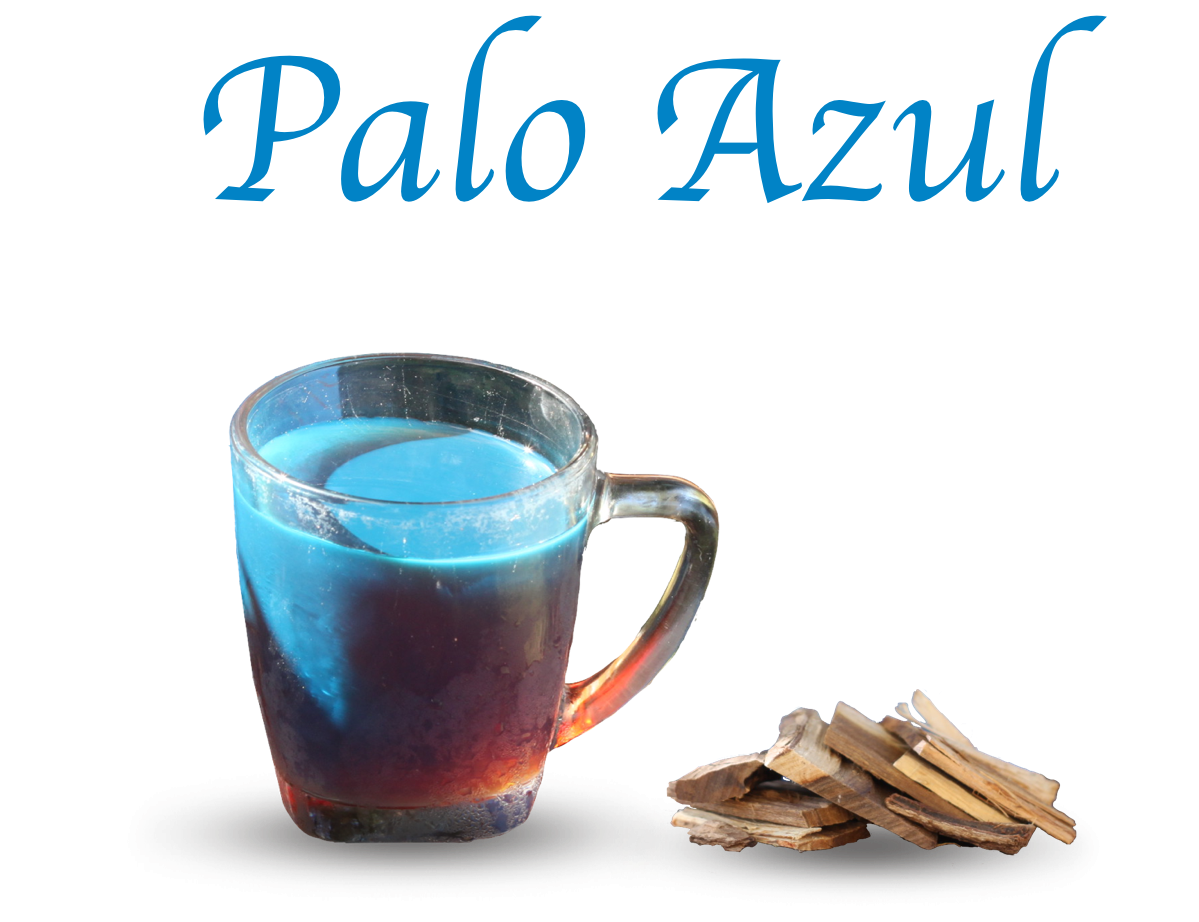

Recent research highlights the palo azul tea’s neuroprotective, antioxidant, anti-glycative, lipid peroxidation inhibitory effects, and PPARγ activation, all of which are pertinent to its potential in mitigating Alzheimer’s disease progression.
1. Neuroprotective & Antioxidant

This 2021 study concluded that “(palo azul) extract exerts the neuroprotective effect via the activation of cellular antioxidant defenses.” They mention that “since oxidative stress (OS) is a main component in neurodegenerative diseases, targeting this causative agent constitutes an important approach in drug discovery.”
Similarly, a 2020 study concluded that “(palo azul) has potential as a source of neuroprotective agents that can target OS, a hallmark of neuronal death in PD (Parkinson’s Disease).” The researchers also mention that “oxidative stress (OS) is a hallmark of several neurodegenerative disorders, including Parkinson’s disease (PD). OS is one of the well-described causes of the massive death of dopaminergic neurons in PD.”
The researchers explain how they evaluated palo azul’s neuroprotective activity: “To evaluate the potential neuroprotective activity of the aqueous extracts, we used the human neuroblastoma cell line IMR-32 exposed to ferric ammonium citrate (FAC) as an OS inducer. Exposure to (palo azul extract) showed a reduction in ROS levels.”

They explain that “phytochemicals are able to protect against OS-induced damage by free radical scavenging capacity or through the enhancement of cellular antioxidant defenses.”
The authors concluded the following: “Our findings suggest a protective activity against OS of the aqueous extract of (palo azul). These data address this plant species as a promising candidate to continue our search for neuroprotective agents.”
Moreover, this 2020 review on palo azul mentions that “among the actions determined are its diuretic [13], antidiabetic, antiglycation [14], antioxidant [15], anti-inflammatory [16], and antimicrobial [17] potential. It also has cytotoxic properties [8], is cardioprotective, and inhibits neurodegeneration.”
2. Anti-glycative

Numerous studies (1, 2, 3, 4, 5, 6, 7, 8) have shown that palo azul is a powerful anti-glycative and anti-AGEs agent due to its high antioxidant capacity.
This 2022 review mentions that “extensive research related to NPs with antiglycation properties may be a very successful approach for the treatment of T2DM and associated neurodegenerative disorders like Alzheimer’s disease.”

They explain that “glycation is the non-enzymatic covalent attachment of a sugar (carbohydrate) to a protein or lipid molecule. This process leads to the formation of advanced glycation end products (AGEs) which bind to the receptor for AGEs (RAGE) and facilitate further disease progression.”
A 2018 study concluded that “(palo azul extract) markedly reduced the formation of AGEs, Amadorin-product/fructosamine, Nε-(carboxymethyl)-lysine, amyloid cross β-structure, and protein carbonyl content in BSA-glucose system and increased total thiol-group after 4 weeks in hyperglycemic zebrafish, (palo azul extract) provided a protective effect against glycation.”
Amyloid β denotes peptides of amino acids that are the main component of the amyloid plaques found in the brains of people with Alzheimer’s disease.
Furthermore, this 2019 found that “(palo azul) reduced level of fructosamine and inhibited the formation of amyloid cross-β structure.
3. Inhibits Lipid Peroxidation

These studies (1, 2, 3, 4, 5, 6) have shown that palo azul significantly inhibits lipid peroxidation.
This 2016 explains how ROS and lipid peroxides cause neurodegenerative damage:
“ROS such as hydrogen peroxide (H2O2), superoxide anion (), hydroxyl radical (OH), nitrogen oxide (NO), and lipid peroxides are formed in aerobic metabolism as normal products but also are produced under pathophysiological conditions in elevated rates. ROS can be responsible for the attack to biological macromolecules such as nucleic acids, proteins, membrane lipids, and carbohydrates, causing damage in the cell, which has been implicated in cardiovascular diseases, cancer, neurodegenerative disorders, and diabetes.”
The researchers concluded that “there was a significant increase of lipid peroxide in the liver, kidney, and pancreas in the diabetic mice group. However, the administration of palo azul extract improved these levels in the treated groups with respect to the diabetic control group.”

Lipid peroxidation is a process under which oxidants such as free radicals attack lipids containing carbon-carbon double bond(s), especially polyunsaturated fatty acids (PUFAs).
This 2007 found that “palo azul’s antioxidant activity reduced the peroxyl formed by AAPH during the initiation of lipid peroxidation, preventing lipid peroxidation from occurring.”
MDA (malondialdehyde) is one of the main omega-6 fatty acids lipid peroxidation products. another frequently assessed marker of oxidative damage. Being a highly reactive dialdehyde produced upon the breakdown of peroxidated PUFAs. MDA was previously implicated in pathogenesis of diabetes mellitus, aging, brain ischemia, and other neurodegenerative diseases.
A 2018 showed that “(palo azul) restored the enzymatic antioxidant system that was able to reduce ROS production, decreasing the generation of MDA.”
4. Upregulates PPARy

Lastly, this 2013 study found that “palo azul up-regulated expression and transcriptional activity of PPARγ.” The researchers also mention that “PPAR-γ agonists have also shown efficacy in Parkinson disease, Alzheimer disease, brain injury, and ALS.”
They explain that “PPAR receptor agonists have proven effective in suppressing the development of animal models of CNS inflammatory and neurodegenerative disorders.[35] In vivo oral administration of the PPAR-γ agonist pioglitazone reduced glial activation and the accumulation of Aβ-positive plaques in the hippocampus and cortex.”
Aβ plaques are one of the two lesions in the brain that define the neuropathological diagnosis of Alzheimer’s disease.
Conclusion
The diverse biochemical properties of palo azul tea, including its neuroprotective, antioxidant, anti-glycative, anti-lipid peroxidative, and PPARγ activation, provide compelling evidence for its potential in mitigating the progression of neurodegenerative diseases. These findings underscore the importance of further research to explore palo azul’s therapeutic potential fully and its integration into treatment protocols for neurodegenerative conditions.
Sources
(2021) Cyclolepis genistoides aqueous extract as source of neuroprotective agents
(2020) Protective Effect of Cyclolepis genistoides Aqueous Extract against Cellular Oxidative Stress
(2020) Phytochemical and Pharmacological Study of the Eysenhardtia Genus